 Share
Share
Share
Share
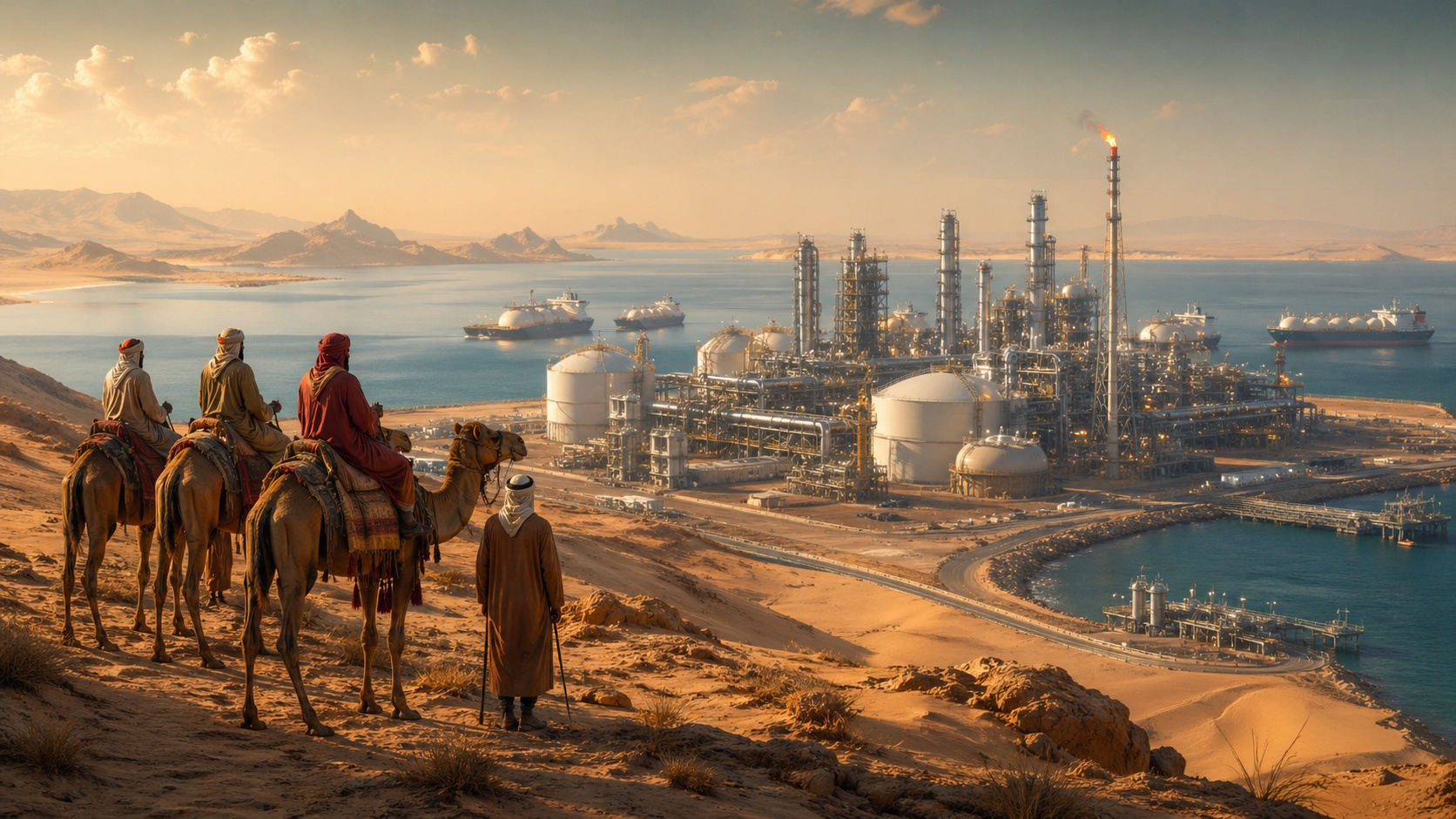
The Middle East crisis is usually described in the language of barrels, tankers, straits and oil prices. The headlines focus on the Strait of Hormuz, vessel insurance, rising oil quotations, risks to the liquefied natural gas (LNG) market and inflationary pressure. But behind these macroeconomic stories lies a less visible, though no less important, question: what will happen to the people who produce, process and transport oil and gas, as well as repair and restart oil and gas infrastructure?
At first glance, the answer seems obvious: if oil becomes more expensive, oil and gas companies should earn more, drill more and hire more people. However, the current crisis shows that this logic does not always work. A high oil price does not help a producer if it cannot export crude, load a tanker, insure a shipment, safely restart a plant or secure financing for a project.
This is why the oil and gas labour market may face not one shock, but two consecutive shocks. The first is short term: production shutdowns, lower refinery utilisation, frozen projects, contractor cuts, postponed rotations and a temporary decline in demand for some technical specialists. The second is delayed: a sharp increase in demand for the same people when infrastructure recovery begins, refineries restart, damaged assets are repaired and postponed investment projects return.
In other words, the crisis may first create a surplus of workers in halted supply chains and then a shortage of those very same specialists during the recovery phase.
When Oil Stops Moving, Work Stops Too
The oil and gas industry is not only about production wells. It is a long and technically complex chain: drilling, upstream production, transportation, marine logistics, storage, refining, gas processing, petrochemicals, trading, maintenance, industrial safety and project construction.
When one critical element in this chain is disrupted, the consequences quickly spread to the rest. If tankers cannot pass through a key route, if export terminals operate intermittently, if a refinery cannot ship petroleum products and storage tanks fill up, companies are forced to reduce production, cut plant utilisation and suspend new work.
In its March oil market report, the International Energy Agency (IEA) describes the crisis as the largest supply disruption in the history of the global oil market. According to the agency, oil and petroleum product flows through the Strait of Hormuz, which before the war amounted to around 20 million barrels per day, fell sharply. Limited options for bypassing this route and the filling of storage facilities forced Gulf countries to cut production by at least 10 million barrels per day. The IEA also notes that more than 3 million barrels per day of refining capacity in the region was shut down because of attacks and the lack of functioning export options. (1)
For the labour market, this means that the impact is unevenly distributed. In the first weeks and months of the crisis, the most vulnerable workers are not necessarily those in the most obviously “oil-related” occupations, but those whose jobs depend on operational continuity: drilling crews, service contractors, refinery operators, shipping specialists, logistics workers, construction teams, commissioning specialists and planned maintenance personnel.
In this situation, companies rarely begin with immediate mass layoffs. A more typical scenario is a hiring freeze, reduced overtime, postponed rotations, unpaid leave, suspended contractor agreements, lower bonuses and delayed graduate programmes. On paper, employment may remain stable, but actual labour demand, working hours and employee income begin to fall.
The Financial Paradox: Expensive Oil Does Not Always Mean More Jobs
One of the main paradoxes of the crisis is that rising oil prices do not necessarily translate into rising employment. Under normal conditions, a high price per barrel encourages drilling, supports capital expenditure (CAPEX), improves cash flow and makes new projects economically attractive. But if infrastructure is damaged, exports are restricted, tankers are stuck, war-risk insurance becomes sharply more expensive, and banks and investors increase risk premiums, a high price becomes not a guarantee of profit, but a symptom of systemic stress.
The International Monetary Fund (IMF) points out that the energy channel is one of the key mechanisms through which the Middle East crisis is transmitted to the global economy: the same shock can look like an improvement in terms of trade for some countries, pressure on the balance of payments for others, and a new round of rising living costs for consumers. The IMF also stresses that many economies are entering this crisis with already limited room for manoeuvre because of high debt levels. (3)
For Middle Eastern countries, this creates a difficult fiscal situation. Oil and gas revenues can change sharply depending on which assets are operating, which export routes are available and how safe it is to continue operations. In its April update on the MENAAP region, the World Bank noted that the closure of the Strait of Hormuz and the destruction of energy and public infrastructure had disrupted markets, increased financial volatility and worsened the growth outlook for 2026. (4)
This macroeconomic backdrop almost inevitably affects the labour market. If government revenues shrink, sovereign wealth funds become more cautious, banks increase the cost of capital, and companies do not know when they will be able to safely export their products, the first things to be frozen are usually not critical ongoing operations, but future investments. New fields are postponed, as are expansions of existing petrochemical projects, refinery modernisation, infrastructure projects, training programmes and the hiring of young specialists.
This is especially dangerous for an industry where workforce cycles are longer than market cycles. The price of oil can be seen on a screen in real time. But a refinery process engineer, a compressor specialist or an experienced fluid catalytic cracking unit operator cannot be trained in a few weeks.
Who Will Be Hit First
In the short-term phase of the crisis, several groups of workers may be the first to come under pressure.
The first group is drilling and oilfield services. If production companies are not sure they can export oil or finance new projects, they postpone drilling operations. This affects drilling crews, directional drilling engineers, mud engineers, cementing specialists, logging specialists, workover teams and well intervention specialists.
The second group is site contractors. These include welders, pipefitters, electricians, scaffolding specialists, insulation workers, industrial painters, rotating equipment mechanics, valve technicians and non-destructive testing (NDT) inspectors. Their employment depends on maintenance, shutdowns, expansion projects and construction work. When capital expenditure is postponed, they are the first to feel the pause.
The third group is marine logistics and terminals. Any crisis around the Strait of Hormuz directly affects tankers, port operations, tugboats, supply vessels, crews, terminal operators, shipment planners and cargo insurance specialists. Even if production continues, logistical uncertainty changes schedules, routes, shifts and staffing needs.
The fourth group is refining and petrochemicals. Here the risk is especially complex: plants may reduce utilisation not only because of damage, but also because of feedstock shortages, inability to ship products, full storage tanks or security threats. The IEA separately emphasises that disruptions affect not only crude markets, but also petroleum product markets, including diesel, jet fuel and liquefied petroleum gas (LPG). (2)
The fifth group is administrative and project functions. When projects are frozen, demand falls for project managers, design engineers, procurement specialists, planners and schedulers, cost controllers, contract lawyers, contract managers and workforce mobilisation specialists.
Importantly, “coming under pressure” does not mean immediately losing a job. In oil and gas, many skills are critical for safety, so companies try to retain their core personnel. But the labour market may become less liquid: fewer new vacancies, less overtime, lower bonuses, fewer international relocations, more temporary contracts and stronger competition for stable positions.
Refineries and Petrochemicals: The Most Fragile Part of the Chain
Downstream — refining and petrochemicals — occupies a special place in this crisis. Production can sometimes be temporarily reduced, wells can be partly mothballed, and tankers can be redirected, but a refinery is a complex living organism. It cannot be switched off as easily as an office light.
A safe shutdown of a plant requires procedures, personnel and time. Pressure, temperature, residual feedstock, catalyst condition, automation systems, fire safety, emissions, wastewater and storage tanks all have to be controlled. After a prolonged outage, the reverse process is needed: inspection, preparation, purging, control system checks (DCS/SCADA), equipment testing, commissioning, gradual ramp-up and troubleshooting.
For workers, this means their role changes. Under normal conditions, operators, mechanics, process engineers and shift supervisors keep production running. In crisis mode, they handle safe shutdowns, preservation, emergency repairs, integrity management, damage assessment and preparation for future start-up.
From a labour market perspective, downstream creates a double effect. When plants are shut down, demand for some personnel may temporarily decline. But during recovery, these same specialists become critically important. An experienced hydrocracker operator, sulfur recovery engineer, catalyst specialist, process safety engineer or instrumentation and control technician is not a mass-market resource. Such people cannot quickly be replaced by workers from neighbouring industries.
The same applies to petrochemicals. Reduced supplies of naphtha, LPG or ethane may lead to lower output of polymers, fertilisers, chemical feedstocks and industrial materials. Deloitte’s analysis indicates that the conflict is already affecting critical global supply chains, including energy, logistics, fertilisers and related sectors. (8)
For the labour market, this means that a crisis in petrochemicals can spread further down the chain — from plant operators to workers at factories that use chemical feedstocks.
Two Labour Markets Instead of One
One of the mistakes in analysing the oil and gas labour market is to speak of it as a single whole. In practice, the crisis creates two different markets.
The first is the market for “stopped operations”. Here, people temporarily become surplus to requirements. These include drilling crews, construction contractors, some operators, temporary staff, logistics workers, service companies and project teams. There is less work, schedules are unstable and companies are saving cash.
The second is the market for “critical resilience”. Here, demand may remain stable or even grow. This includes specialists in occupational health, industrial and environmental safety (HSE), process safety, emergency response, security, inspection, repairs, automation, industrial cybersecurity, alternative-route logistics, procurement of critical spare parts and risk management.
The paradox is that the same person may move from the first category to the second. For example, a mechanic who yesterday maintained a planned expansion project may tomorrow be needed for emergency repairs at a compressor station. A project engineer whose new greenfield project has been frozen may move into a brownfield modifications team. A procurement specialist who handled routine supplies may become critical in sourcing pumps, valves, cables, instrumentation and spare parts during disruptions.
This is why the crisis does not only reduce employment. It changes its structure.
The Delayed Shortage: Why There May Not Be Enough People After the Crisis
The most important part of this story will begin not during the shutdown, but after it. When the situation stabilises, companies will not be able simply to press a “resume” button. They will have to solve several problems at once: repair damaged assets, restart idled plants, restore production, carry out postponed maintenance, return CAPEX projects, renew contracts, mobilise contractors and rebuild logistics.
In its special report on the consequences of the Middle East conflict, Rystad Energy directly identifies the closure of the Strait of Hormuz, pressure on upstream, labour availability in the region and $100-per-barrel oil scenarios as key themes. In the third edition of its special report, Rystad also considers LNG disruptions, macro scenarios and the cost of repairing energy infrastructure. (5)
This means that recovery may not be smooth, but abrupt. Companies that have postponed projects for months will enter the market simultaneously in search of the same specialists. They will need rotating equipment mechanics, welders, electricians, automation engineers, refinery operators, commissioning engineers, HSE specialists, NDT inspectors, construction managers, planners, procurement specialists, QA/QC specialists and start-up specialists.
The problem is that these people are not sitting on the bench waiting.
Some specialists will move into other industries: power generation, construction, mining, data centres, infrastructure projects, nuclear energy and renewables. Electricians, welders, automation engineers and project managers are in demand far beyond oil and gas. If the crisis lasts long enough, people settle into new sectors, change their career plans and do not automatically return.
Some expatriate specialists may not want to return to the region because of security risks, family considerations, insurance, visa restrictions and psychological fatigue. Even if salaries rise, risk premiums do not always compensate for uncertainty.
Some workers will lose current permits, certificates and operational readiness. After downtime, they will need safety inductions, medical checks, recertification, training on new procedures, site access and adaptation to altered or damaged assets.
All of this will happen against the backdrop of an already existing global shortage of skilled labour in energy. In its World Energy Employment 2025 report, the IEA notes that applied technical occupations — electricians, pipefitters, line workers, plant operators and other technical specialists — are already in particularly short supply. These occupations have added 2.5 million jobs since 2019 and account for more than half of the global energy workforce. The IEA also highlights the pressure caused by an ageing workforce: in advanced economies, for every new worker under the age of 25, there are 2.4 energy sector workers approaching retirement. (7)
This makes a potential Middle Eastern workforce shock part of a wider global process. Even without war, the energy sector was already competing for people. With war, that competition may become much tougher.
Who Will Be Most in Demand After Stabilisation
During the recovery phase, demand may rise sharply for several groups of specialists.
The first group is maintenance and repair.
This includes rotating equipment mechanics, turbine specialists, compressor specialists, pump specialists, valve technicians, welders, pipefitters, electricians, instrumentation and control specialists, NDT inspectors, corrosion engineers and asset integrity management specialists. They are needed for damage assessment, equipment restoration, leak repair, component replacement and checks to ensure assets are ready for start-up.
The second group is commissioning and operations.
After a long shutdown or repair, a plant does not simply need to be switched on; it needs to be brought safely back into operation. This requires commissioning engineers, start-up managers, process engineers, refinery operators, DCS/SCADA specialists, shift supervisors and process safety engineers.
The third group is refining and petrochemicals.
Specialists in crude distillation and vacuum distillation units (CDU/VDU), fluid catalytic cracking (FCC), hydrocracking, hydrotreating, sulfur recovery, hydrogen units, flare systems, storage tank farms, loading terminals and catalyst management may become especially scarce.
The fourth group is EPC and project management.
After the crisis, companies will try to catch up on postponed projects while also restoring damaged assets. As a result, demand will rise for project managers, construction managers, planners and schedulers, cost controllers, procurement specialists, expediters, QA/QC specialists, contract managers and site supervisors.
The fifth group is HSE, safety and emergency response.
Post-conflict recovery is not ordinary industrial maintenance. It requires assessment of fire, environmental, chemical, process and military risks. This creates demand for HSE managers, emergency response coordinators, industrial firefighters, environmental remediation experts, security coordinators and war-risk specialists.
The sixth group is logistics and supply chain.
Damaged routes, overloaded ports, vessel shortages, higher insurance premiums, equipment delays and competition for spare parts make supply chain one of the key functions. Marine logistics, heavy-lift transport, customs clearance, procurement, expediting and spare parts management become especially important.
New Demand: Not Only Engineers, but Risk Specialists Too
The crisis may also change the very idea of which professions belong to the oil and gas industry. In the past, the focus was on geologists, drillers, process engineers, operators and mechanics. Now, specialists who help the industry survive in an unstable environment are playing an increasingly important role.
Demand may grow for geopolitical risk analysts, sanctions compliance specialists, war-risk insurance specialists, industrial cybersecurity experts, business continuity specialists, crisis procurement professionals, digital twin specialists, remote operations experts and supply chain resilience specialists.
This is not a secondary function. If a company cannot obtain a valve, compressor, catalyst, vessel, insurance policy or work permit, its engineers will not be able to start up the asset. In the new environment, the competitive advantage goes not only to those who have oil reserves, but also to those who know how to manage risks, supplies and people.
The Geography of the Labour Market Will Begin to Change
The Middle East crisis may also redistribute demand for oil and gas specialists around the world. If supplies from the region are restricted, other producers will try to increase output or occupy the gaps that open up. This may support employment in the United States, Canada, Latin America, Africa, Central Asia and parts of Asia.
In a recent analysis, The Guardian described the crisis as a possible energy pivot: disruptions around the Strait of Hormuz are strengthening the role of the United States and Latin America as alternative sources of oil, while also accelerating interest in clean technologies and reducing dependence on Middle Eastern routes. (9)
For the labour market, this means the crisis may not simply destroy jobs in one region, but move them elsewhere. US shale, Canadian infrastructure, Brazilian offshore, projects in Guyana and Suriname, African fields, Asian refining, LNG terminals and European energy security projects may begin competing for the same specialists as the Middle East.
This scenario is especially important for workers. If someone receives a contract in another country or industry during the crisis, their return to the region after stabilisation becomes a question of conditions: pay, safety, taxes, visas, family, employer reputation and long-term prospects.
The Social Dimension: Behind Industry Terms Are Family Incomes
For international oil and gas companies, a workforce crisis is a question of productivity, safety and project costs. For workers, it is a question of income, stability and the future. Temporary employees, migrants, contractors, service company workers and small businesses around industrial zones are especially vulnerable.
The International Labour Organization (ILO) warns that the Middle East crisis is affecting jobs, incomes and working conditions far beyond the immediate conflict zone. The organisation stresses the need for early measures to protect labour markets, especially for vulnerable workers, small businesses and low-income households. (6)
This is especially relevant for oil and gas clusters where one major asset supports an entire ecosystem: transport, catering, housing, maintenance, security, medical services, local supplies, training and temporary staffing. If a plant or terminal reduces utilisation, this affects not only engineers, but also drivers, cooks, security guards, cleaners, hotels, landlords and small businesses.
That is why the oil and gas labour market cannot be viewed only through the lens of highly paid engineers. Behind every refinery shutdown lies a much broader local economic impact.
What Companies Should Do
For companies, the main lesson of the crisis is that workforce resilience must become part of energy security strategy. People cannot be treated as a variable cost item that can be quickly reduced and then quickly restored.
First, companies should identify the critical skills without which assets cannot be safely shut down, preserved and restarted. These include operators of key units, automation specialists, HSE professionals, process safety specialists, rotating equipment experts, electrical systems specialists, inspection personnel and commissioning specialists.
Second, companies need to retain their core personnel even when utilisation temporarily falls. Losing a few experienced people may cost more than keeping them through a period of downtime.
Third, it is important to secure relationships with contractors in advance. During the recovery phase, contractors will become a scarce resource. Companies that sign framework agreements ahead of time, ensure mobilisation conditions and maintain supplier trust will recover faster.
Fourth, companies need to invest in reskilling and upskilling. If some projects are frozen, this time can be used to train personnel in safe shutdowns, start-ups, digital systems, remote operations, industrial cybersecurity and crisis management.
Fifth, recovery scenarios need to be prepared in advance. When the crisis ends, the winners will not be the companies that announce vacancies first, but those that already know which people, contractors, materials, permits and logistics routes they will need.
What Workers Should Keep in Mind
For oil and gas specialists, the crisis also changes the strategy. Narrow specialisation remains valuable, but the best protected workers are those who can operate at the intersection of several areas.
A refinery operator who understands process safety and DCS. A mechanic who understands predictive maintenance. A project engineer who knows how to work with supply chain risk. A procurement specialist who understands equipment criticality. An HSE specialist with emergency response experience. These profiles become especially valuable.
Workers should also keep their certifications current, maintain professional networks, document their experience, continue training and be ready for geographic mobility. Recovery may create many opportunities, but they will appear quickly and unevenly.
The Main Takeaway
The Middle East crisis shows that the oil and gas industry is vulnerable not only to the loss of barrels, tankers and pipelines. It is also vulnerable to the loss of workforce continuity.
At first, the crisis may reduce demand for some specialists: drillers, contractors, operators, logistics workers, project teams, refinery staff and petrochemical workers. But later, those same occupations may become the centre of intense competition when companies simultaneously begin restoring production, repairing infrastructure, restarting plants, returning postponed projects and making up for months of downtime.
That is why the main question for the industry is no longer only: “How much oil can return to the market?” A far more important question is: who will produce, process, transport, repair and restart that oil?
In oil and gas, infrastructure can be rebuilt, but experience cannot be printed. And if the crisis drags on, the scarcest resource after stabilisation may turn out not to be barrels, but people.
References and Sources Used
-
International Energy Agency — Oil Market Report, March 2026.
-
International Energy Agency — New IEA report highlights options to ease oil price pressures on consumers in response to Middle East supply disruptions, 20 March 2026.
-
International Monetary Fund — How the War in the Middle East Is Affecting Energy, Trade, and Finance, 30 March 2026.
-
World Bank — Conflict Hits MENAAP Economies, Underscoring Need for Action to Boost Resilience, Create Jobs, 8 April 2026.
-
Rystad Energy — Special report: Middle East conflict implications, March 2026.
-
International Labour Organization — Lasting shocks from the Middle East crisis: Emerging risks for the world of work, April 2026.
-
International Energy Agency — Energy employment has surged, but growing skills shortages threaten future momentum / World Energy Employment 2025.
-
Deloitte — The Middle East conflict begins to cast a shadow on the global economy, 18 March 2026.
-
The Guardian — The great energy pivot: US oil and Chinese solar are the winners in Trump’s war on Iran, 26 April 2026.
-
IEEFA — Impact of Middle East Crisis on Global Energy Markets, April 2026.
 Previous article


 8279
8279



Share


